



Preserving personal narratives through AI-powered conversations.
A full-stack storytelling platform that helps people capture and preserve meaningful life experiences through guided conversational interviews.
Stories of My Life combines speech recognition, natural language processing, text-to-speech, real-time communications, and AI conversation design to create an experience that feels less like filling in a form and more like talking to a thoughtful friend.
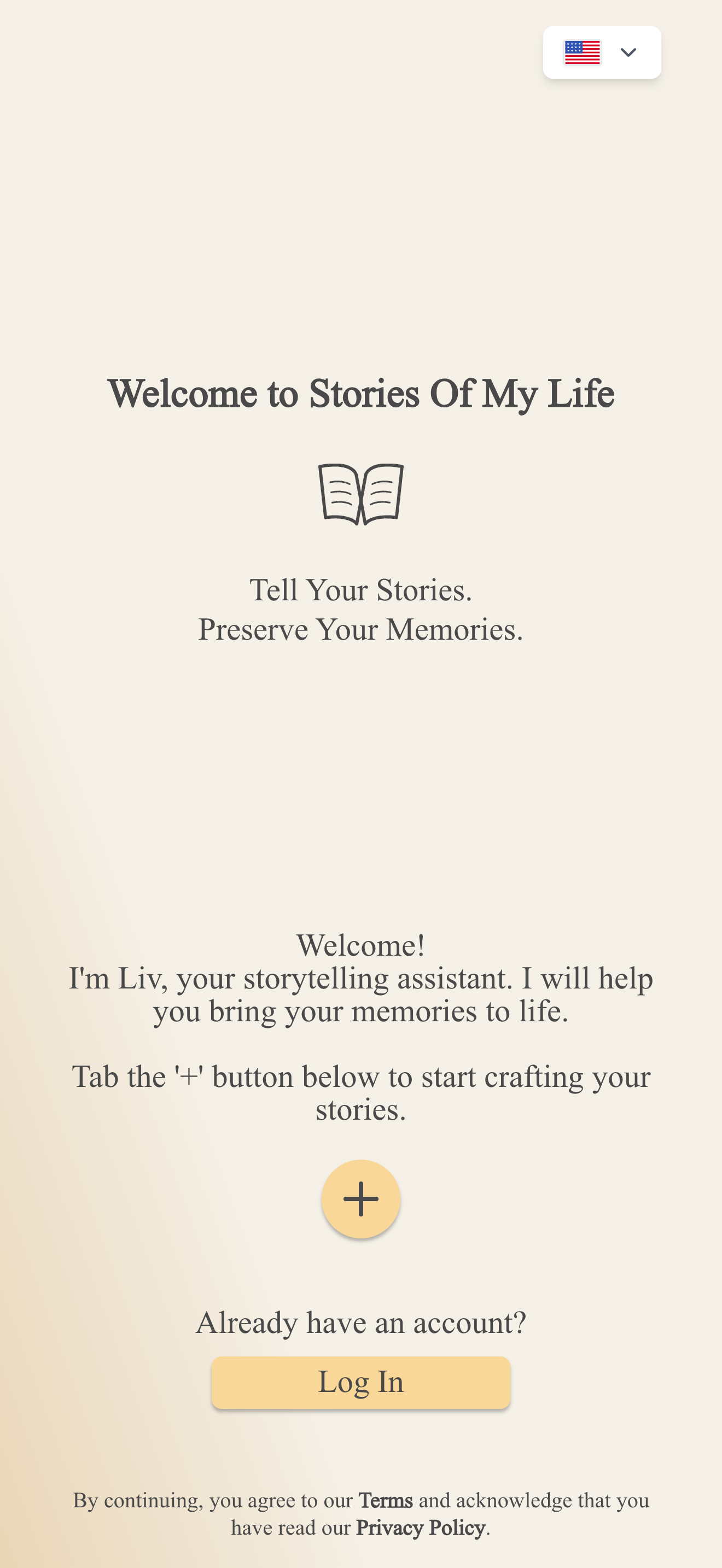
Personal stories disappear before they are preserved.
Family histories, life experiences, and personal narratives carry enormous value, yet capturing them usually requires time, confidence, another person's availability, or professional help.
The result is simple and unfortunate: countless meaningful stories remain untold.
Writing feels difficult
Blank pages create pressure. Many people procrastinate, lose momentum, or abandon the process entirely.
Recording lacks guidance
A microphone can capture someone's voice, but it does not know which memory to explore or what question to ask next.
Interviews require another person
Family interviews depend on schedules, confidence, preparation, and knowing how to ask useful questions.
Professional services are inaccessible
Traditional biography and memoir services can be expensive and impractical for everyday storytelling.
The platform needed to provide enough structure to help people remember and articulate meaningful details without making the process feel clinical, technical, or scripted.
Build a conversational AI ghostwriter, not another recording tool.
We approached Stories of My Life as a complete product engineering challenge spanning voice processing, conversational AI, real-time communications, story management, localization, subscriptions, and privacy.
Capture natural speech through the browser.
Stream audio into real-time speech recognition.
Use story context and previous memories.
Generate an empathetic contextual follow-up.
Convert the AI response back into natural voice.
Turn the conversation into an editable narrative.
The resulting architecture is intentionally dual-layered: an approachable conversational interface on the surface, supported by sophisticated speech, AI, audio, data, and subscription infrastructure underneath.
One place to capture, preserve, refine, and share.
Users start an interview session, speak naturally about their experiences, and receive thoughtful follow-up questions from an AI storytelling assistant.
Transcription, conversation guidance, voice synthesis, story organization, editing, sharing, localization, subscriptions, and usage tracking all happen inside one product.
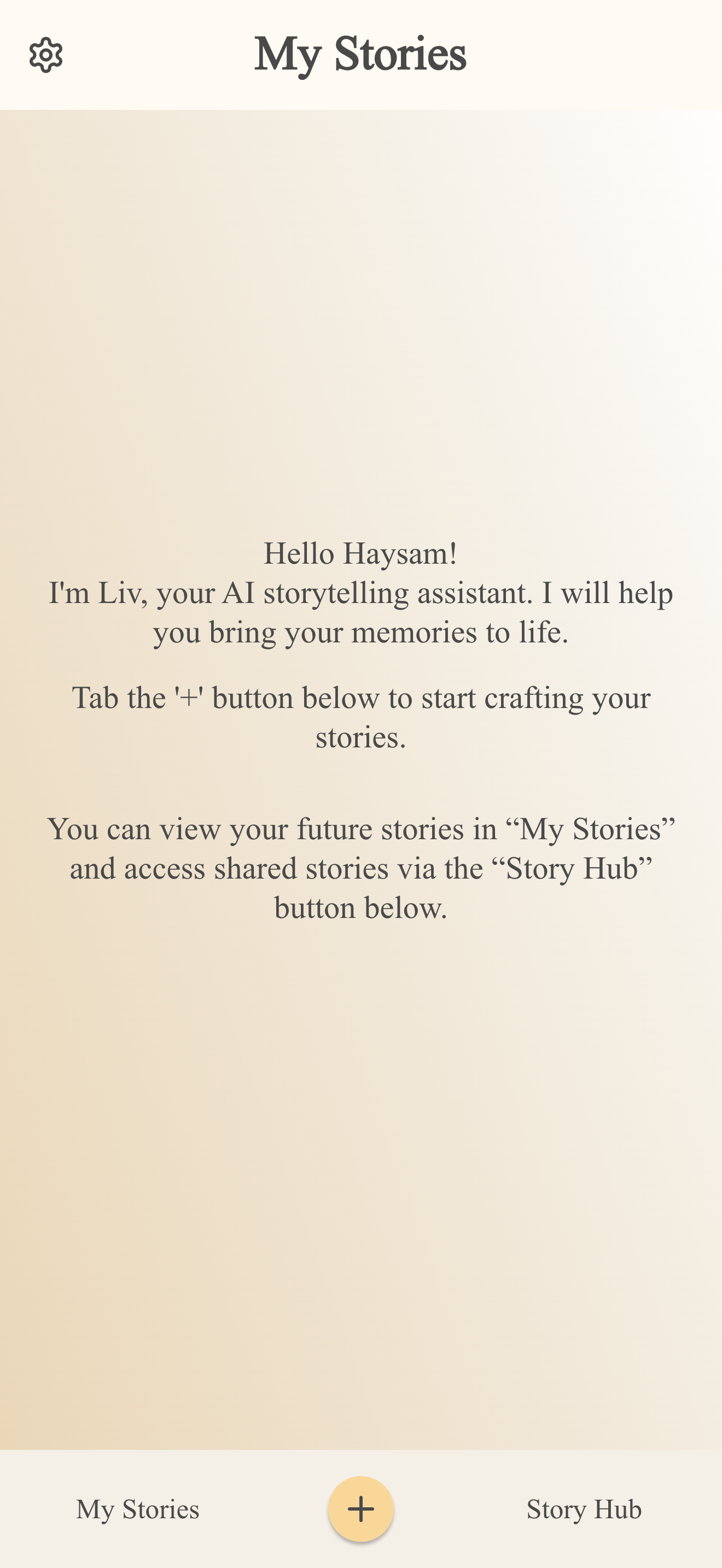
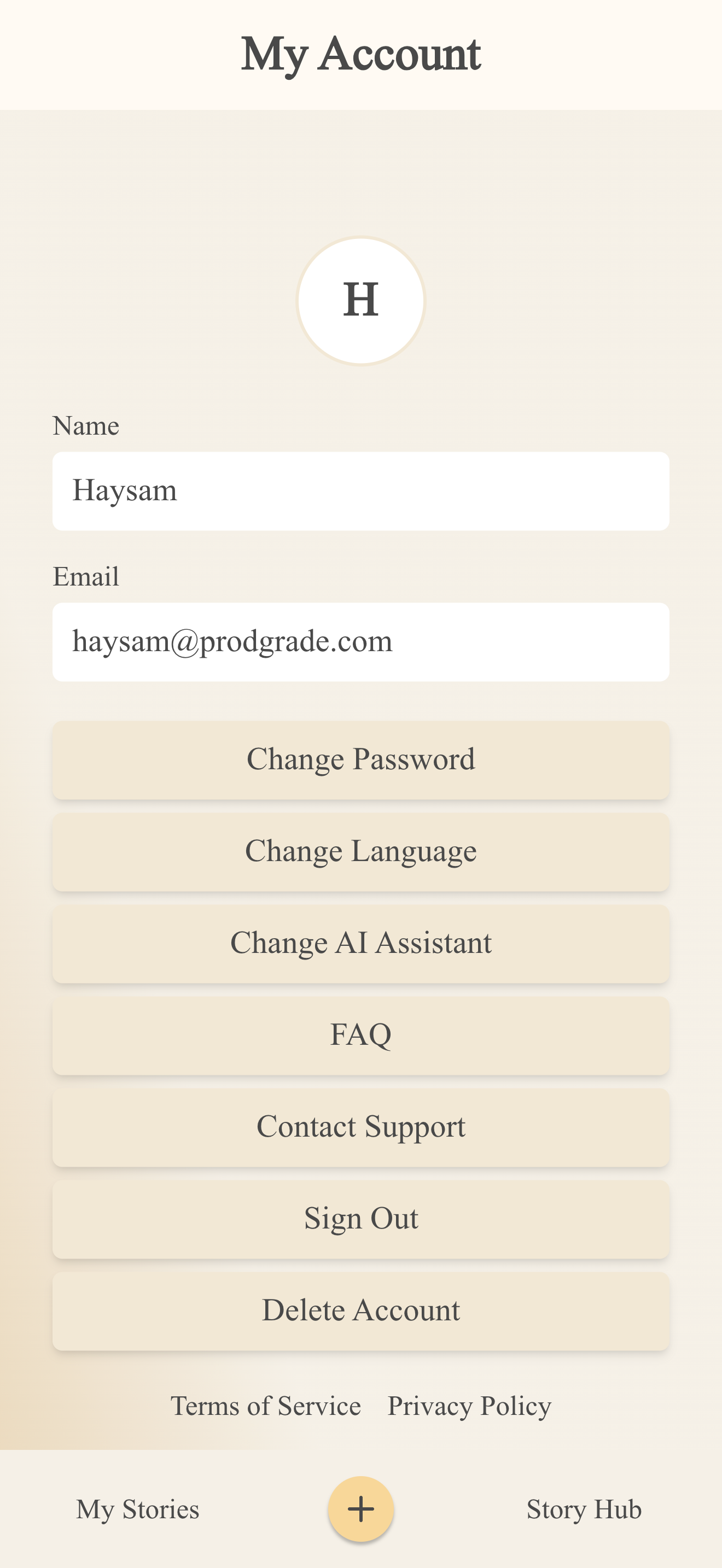
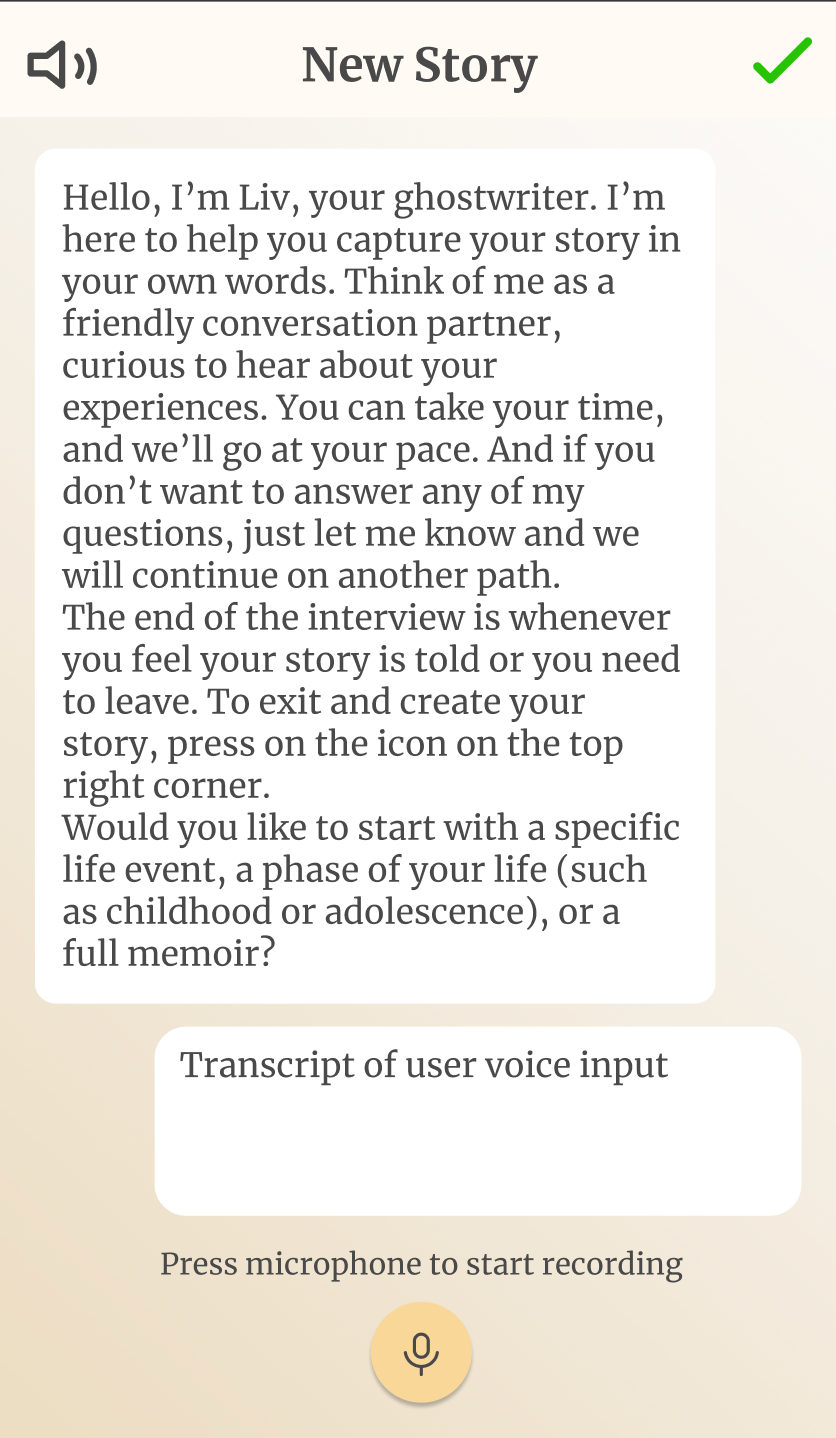
Conversations that know where the story should go next.
Users can choose between two storytelling assistants, Liv and Mateo, each with their own voice and conversational style.
Instead of passively recording, the assistants actively guide the interview using the Pixar Story-Spine methodology to help transform memories into complete, engaging narratives.
- Two distinct AI assistant personas
- Context-aware conversation history
- Pixar Story-Spine narrative methodology
- Adaptive follow-up questioning
- Curated topics across different life stages
- Warm, non-clinical conversational design
- Multi-language interviewing
OpenAI GPT-4.1 powers the primary conversation layer, with Google Gemini 2.5 available as a fallback model when needed.
Turning conversation into text while the user is still speaking.
Audio is captured using the Web Audio API and streamed to the server over WebSocket connections. Groq Whisper processes those chunks and sends incremental transcription updates back to the browser.
Continuous audio chunks move from client to transcription service in real time.
Users see their words appear while they are still speaking.
The interface automatically recognizes when a response has finished.
Batch transcription takes over when a live connection cannot be maintained.
Device-specific silence thresholds reduce premature cutoffs while keeping conversations responsive.

AI responses become natural spoken dialogue.
Google Cloud Text-to-Speech converts each assistant response into spoken audio so the interview feels like a conversation rather than a text-based workflow.
Long responses are split at sentence boundaries, synthesized in parallel, concatenated into seamless audio buffers, and streamed back to the browser.
Warm conversational presentation.
Alternative assistant personality.
Long responses are automatically segmented.
Chunked delivery prevents response timeouts.
From spoken memory to polished narrative.
Once an interview finishes, users can refine their story using a TipTap-based rich text editor while retaining the original conversational transcription.
The final story can therefore become more polished without losing the raw source material it came from.
Generate useful story titles from the interview context.
Store creation dates and story dates separately.
Refine narrative structure using TipTap.
Preserve the complete conversational history.
Search titles and content using whole-word matching.
Track the AI tokens consumed by every story.
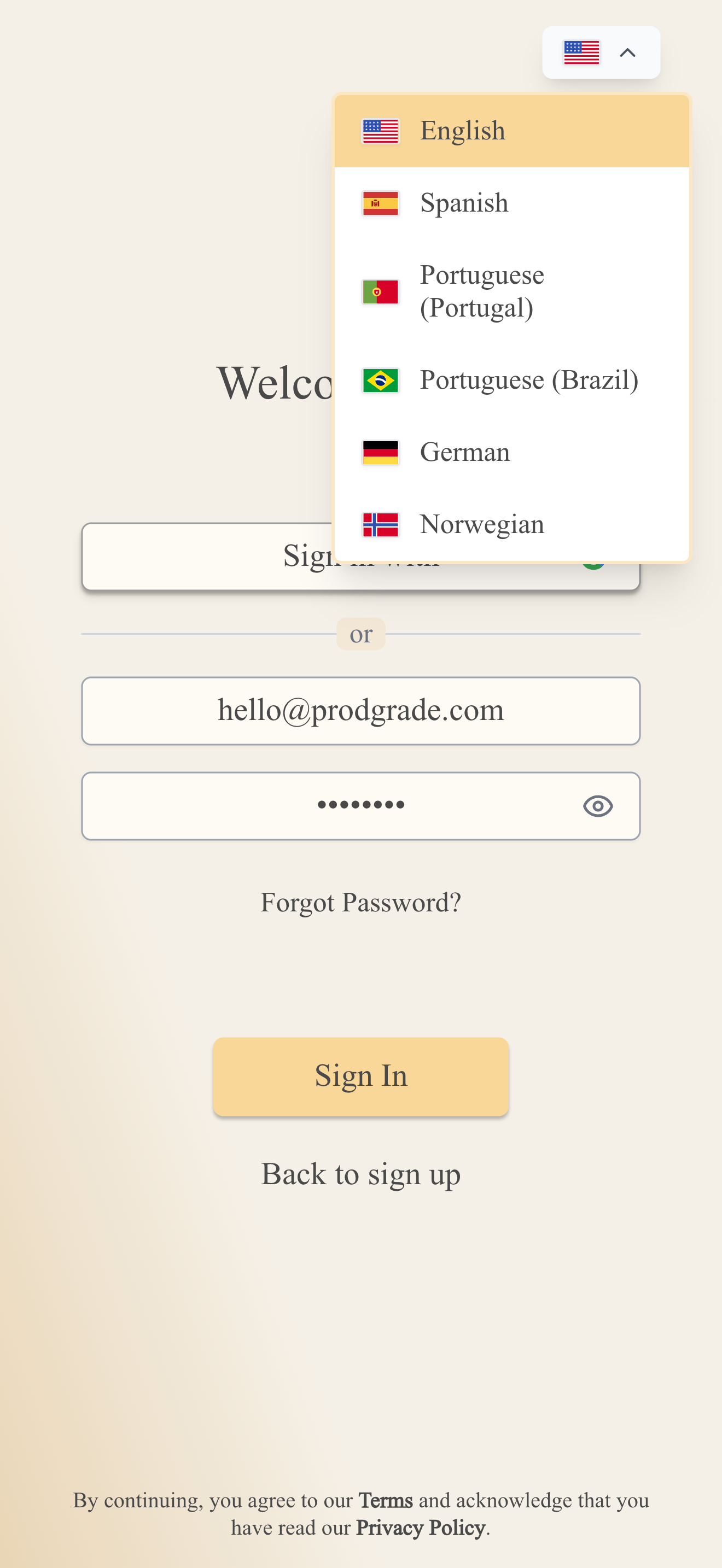
Stories told in the user's own language.
Localization is supported across both the interface and the conversational interview layer so users can tell personal stories in the language that feels most natural.
The platform initially estimates language from the user's location, while still allowing manual selection at any time.
Completed stories can also be translated into supported languages, with cached translations refreshed when the original changes.
Keep memories private, or let them travel further.
The sharing model was designed around the fact that not every personal story belongs in the same audience.
Share identifiers are cryptographically generated, revocable, and connected with view tracking for lightweight analytics.

Sustainable AI usage with transparent limits.
A token-based subscription model balances accessible trials with the operating cost of multiple AI and cloud services.
Stripe handles recurring monthly and yearly billing, while token allocations reset with each subscription cycle.
New users receive enough usage to properly explore conversational storytelling.
Input and output usage is tracked independently across OpenAI and Google services.
API consumption and estimated USD cost are calculated as the product is used.
Subscription renewal automatically refreshes the user's available token allocation.
Users can expand available capacity without changing the underlying experience.
Real-time AI infrastructure behind a simple conversation.
The product brings together streaming audio, speech recognition, large language models, synthesized voice, authentication, subscriptions, localization, and persistent story data.
Explore Custom Software DevelopmentNext.js 15 · TypeScript · React Query · TailwindCSS · TipTap · Web Audio API
Express.js · TypeScript · MongoDB · Mongoose · WebSocket · JWT
OpenAI GPT-4.1 · Gemini 2.5 · Groq Whisper · Google Cloud TTS · Google Speech-to-Text
Stripe · Google OAuth · bcrypt · Nodemailer
8KB audio chunks keep long generated responses responsive and reduce timeout risk.
Dedicated connections return incremental speech recognition while recording continues.
Large responses are segmented, synthesized concurrently, and reassembled.
Device-aware thresholds and buffer handling improve browser reliability.
Gemini provides structured fallback when the primary OpenAI model is unavailable.
MongoDB pooling and reconnection logic provide more predictable application behavior.
Every AI call accounted for.
Token consumption is tracked at multiple levels so users can understand usage and the system can enforce subscription limits before expensive processing starts.
Personal stories deserve serious protection.
Stories of My Life contains deeply personal narratives, account data, AI conversation history, and billing information. Privacy therefore shaped both the product architecture and the user experience.
Authentication Security
- bcrypt hashing with 12 salt rounds
- Short-lived JWT access tokens
- HTTP-only refresh cookies
- Google OAuth2 integration
- Time-limited password reset tokens
Data Protection
- MongoDB transactions
- 90-day soft-delete grace period
- Cascading deletion across related records
- Scheduled GDPR cleanup jobs
API & Privacy Controls
- Origin-specific CORS
- Stripe webhook verification
- Environment validation
- Revocable share links
- Full account deletion controls
A complete platform for preserving personal narratives.
Prodgrade built Stories of My Life across the complete product lifecycle, from the conversational interview interface to speech infrastructure, AI orchestration, story management, billing, and privacy.
The result gives individuals an accessible way to turn spoken memories into lasting stories.
Architecture designed for consistent availability and recoverable real-time connections.
WebSocket speech-to-text provides immediate feedback during the interview.
Localization reaches across interface, speech recognition, AI prompts, and synthesized voice.
Token allocations and billing controls align user value with real AI infrastructure costs.
Curated topics and adaptive prompts help users move from memory to meaningful narrative.
Complex AI infrastructure. One simple conversation.
The complexity lives underneath the surface: WebSocket streaming, transcription models, prompt orchestration, voice synthesis, token management, mobile-specific audio logic, localization, storage, and billing.
For the user, the experience remains intentionally simple: choose an assistant, start talking, and let the platform guide the story.
No technical setup and no complicated authoring workflow.
Context models, assistant personas, narrative methodology, and adaptive questioning.
WebSockets, Whisper, silence detection, TTS, streaming, and fallback processing.
Stories, auth, payments, tokens, sharing, localization, security, and data lifecycle.
Product engineering for a deeply human AI experience.
Stories of My Life represents work across product engineering, application development, conversational AI, real-time communications, speech processing, payment infrastructure, security, and cloud services.
The result is a production-grade SaaS product built around one universal challenge: preserving the stories that matter before they are forgotten.
Building something where AI should feel invisible to the user?
Prodgrade can help turn complex AI, real-time, backend, and product requirements into a coherent, production-ready experience.
Design around the user problem before the model.
Product, frontend, backend, integrations, and infrastructure.